
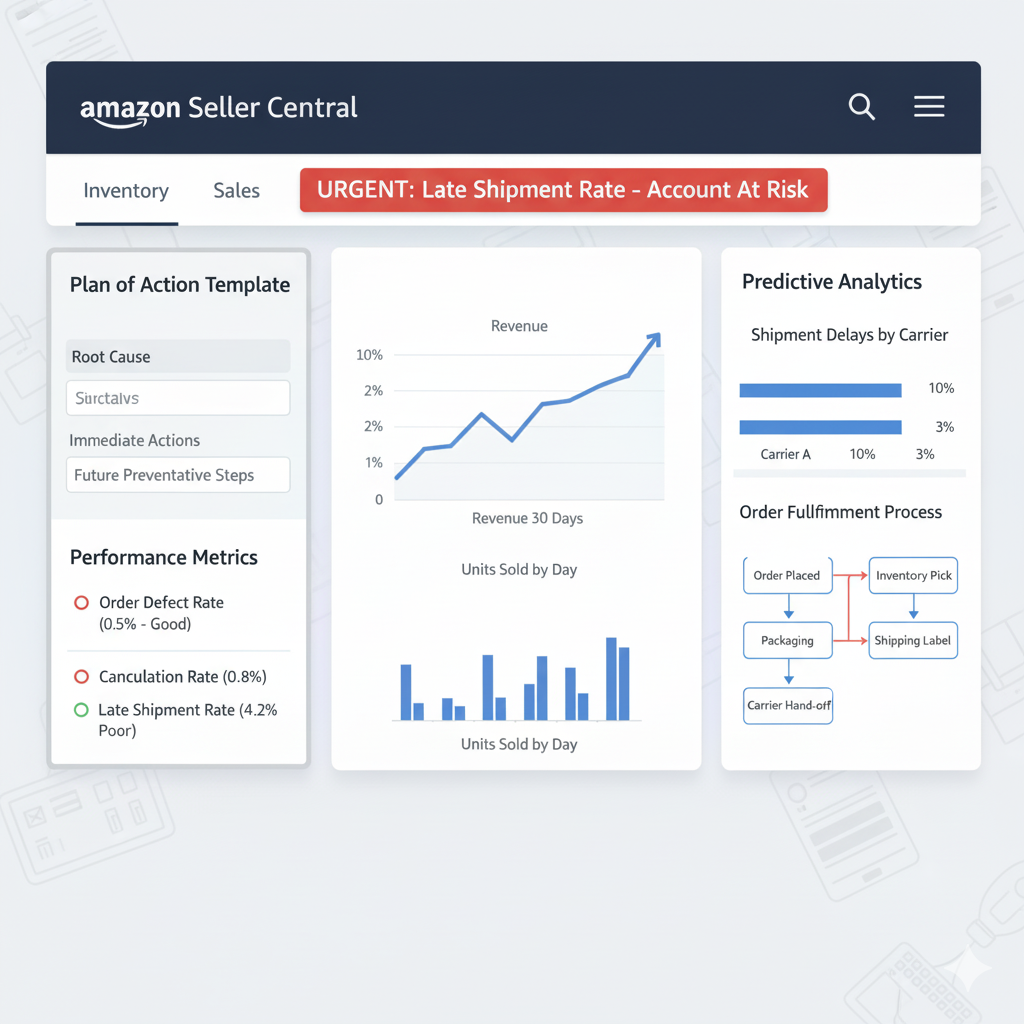
Late shipments can hurt your Amazon seller metrics and even put your account at risk. If your late shipment rate exceeds Amazon’s threshold, you may receive a performance warning or account suspension. In such cases, submitting a well-structured Plan of Action (POA) is essential to reinstate your account and maintain buyer trust.
Here’s a practical guide for creating an Amazon Plan of Action specifically for late shipments, including an example you can adapt for your situation.
What Is an Amazon Plan of Action (POA)?
A Plan of Action is a formal document submitted to Amazon that explains:
- The issue – What went wrong
- Root cause – Why it happened
- Corrective actions – How you fixed it
- Preventive measures – Steps to prevent it in the future
Amazon uses POAs to evaluate whether a seller is capable of maintaining performance standards.
Key Elements of a Late Shipment POA
- Introduction / Acknowledgment of the Issue
- Admit the problem clearly and professionally.
- Avoid blaming Amazon or buyers.
- Root Cause Analysis
- Identify the reasons for late shipments.
- Common causes: supply chain delays, staffing issues, inaccurate inventory tracking.
- Corrective Actions Taken
- Explain exactly what you’ve done to fix the late shipments.
- Examples: expedited shipping, inventory updates, using FBA, notifying buyers promptly.
- Preventive Measures
- Detail steps to avoid future late shipments.
- Examples: better inventory forecasting, backup suppliers, automation tools for alerts and orders.
Example: Amazon Plan of Action for Late Shipment
Issue:
Our late shipment rate exceeded Amazon’s performance standards due to delayed order fulfillment over the past month.
Root Cause:
The delays were caused by temporary staffing shortages and inaccurate inventory tracking in our fulfillment center, leading to slower processing times.
Corrective Actions Taken:
- Hired additional fulfillment staff to handle peak order volume.
- Implemented updated inventory tracking software to prevent stockouts.
- Contacted affected customers with apologies and offered expedited shipping or refunds.
Preventive Measures:
- Introduced daily inventory checks and automated reorder alerts.
- Set up a contingency plan with an alternate fulfillment partner during peak seasons.
- Established standard operating procedures (SOPs) to ensure orders are shipped within Amazon’s required timeframes.
Closing Statement:
We are committed to maintaining Amazon’s performance standards and providing excellent service to our customers. With these corrective and preventive actions in place, we expect to prevent late shipments moving forward.
Tips for Writing an Effective POA
- Keep it concise and professional.
- Avoid excuses; focus on facts and actions.
- Be specific about the corrective and preventive measures.
- Show commitment to continuous improvement.
Final Thoughts
Submitting a well-crafted Plan of Action for late shipments is crucial for maintaining your Amazon seller account. By clearly identifying the root cause, taking corrective actions, and implementing preventive measures, you can restore your account and improve long-term shipping performance.
Consistency, transparency, and actionable steps are key to regaining Amazon’s trust and protecting your business reputation.